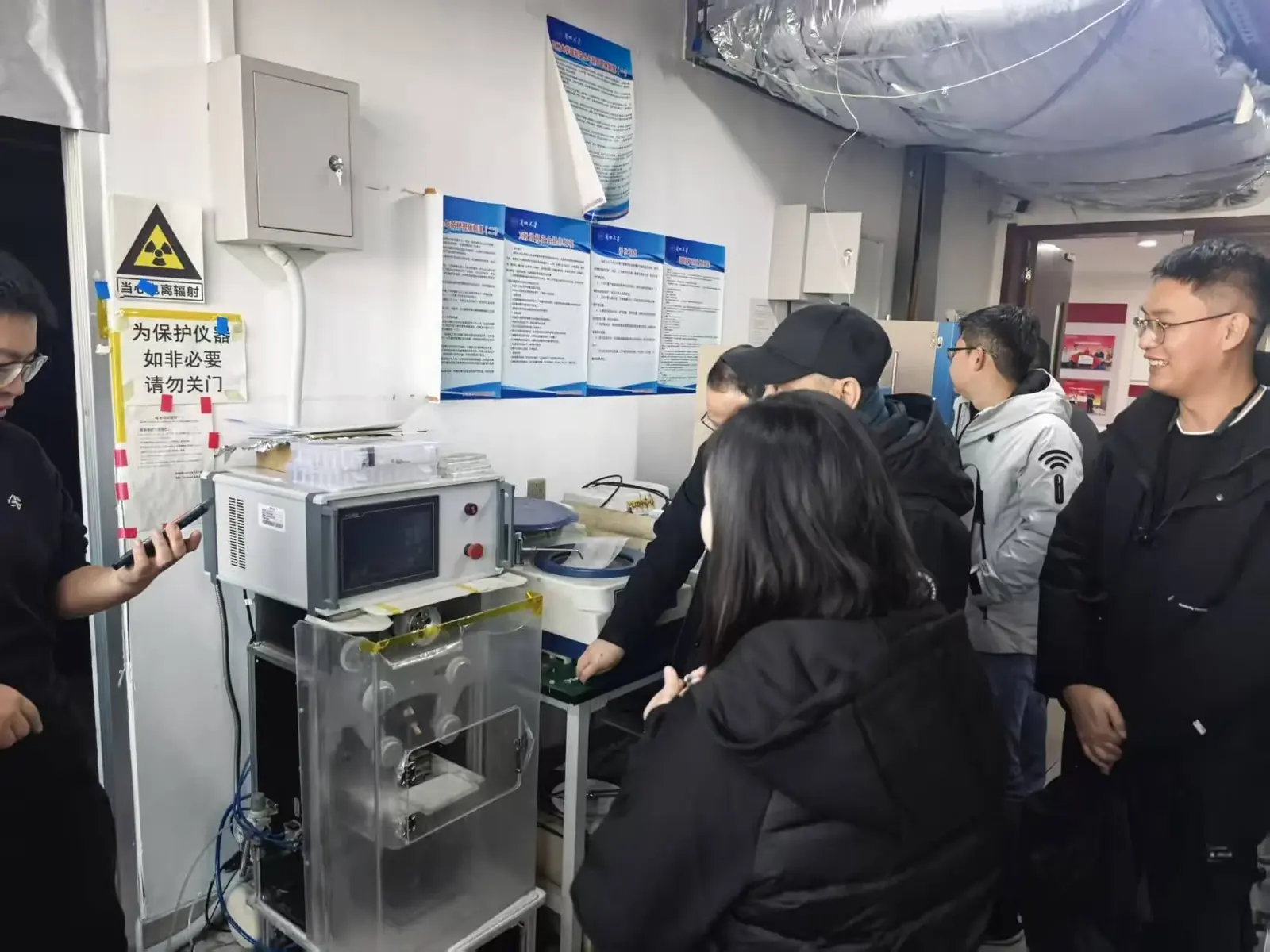
Some of the most valuable hours we spend each year happen nowhere near a trade show — they happen on campuses, with agricultural engineering departments who study the problems we build against.
What we work on together
Our university collaborations are deliberately practical. Current work spans three areas:
- Droplet physics. Matching nozzle output to modern low-volume formulations — finer control over droplet size without sacrificing drift behaviour. Work that started as a request from formulators at CAC.
- Battery performance. Real-world discharge behaviour in heat, dust, and slope conditions — the gap between lab-rated and field-actual runtime, and how to close it honestly.
- Ergonomics. Load distribution studies that shaped our padded harness redesign, using instrumented carries on actual terrain rather than treadmills.
Why a sprayer company funds research
Because “durable and dependable” is an engineering claim, and engineering claims need evidence. University partners test our assumptions without courtesy — when a design underperforms, we hear it plainly, with data. Several improvements in the current line trace directly to a student’s measurement that contradicted our intuition.
For students, the work is applied and shipped: research that ends up in a farmer’s hands within a product cycle or two. If you run an agricultural engineering program and see an overlap with what we build, our door is open — reach us through the contact page.


