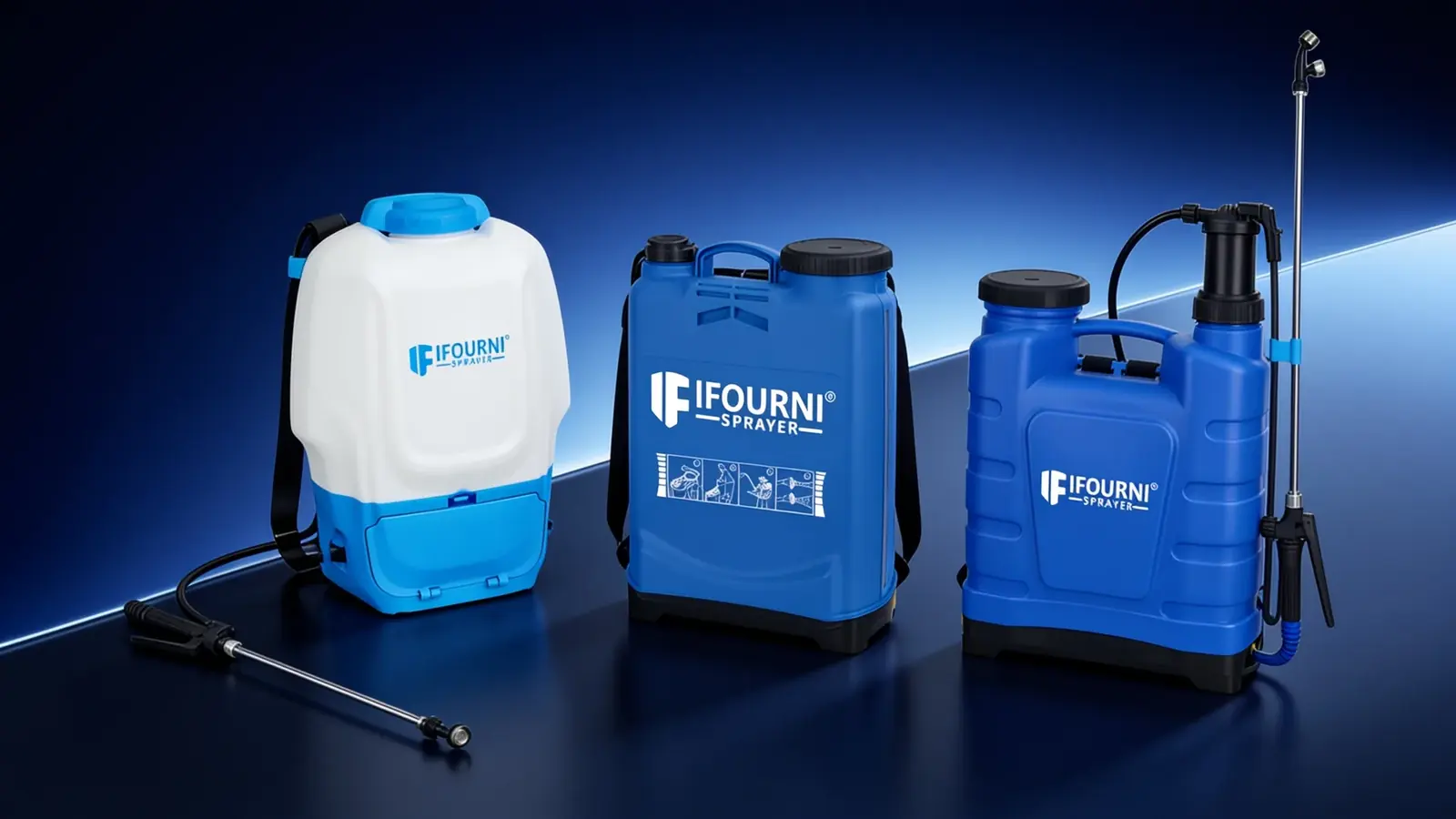
A sprayer is only as good as the last five centimetres — the nozzle. It decides whether a farmer’s chemical lands as an even mist on the leaf or dribbles down the stem. Which is why, in a factory full of standardized lines, nozzle testing is still done by hand.
The five checks
- Pressure. Each nozzle runs at working pressure on the bench — no leaks at the coupling, no whistle, no flutter.
- Mist pattern. Sprayed against a reference card. The technician looks for even spread and consistent droplet size, edge to edge.
- Runtime. A sustained spray — patterns that start clean and degrade after a minute are a fail.
- Cutoff. Release the trigger; the spray must stop clean. Lingering drips waste chemical and burn leaves.
- Drip-test. Pressurized and left standing. A single bead of moisture at the seal fails the piece.
Why not automate it?
We automate plenty — molding, winding, assembly. But a camera scoring a mist pattern still misses what an experienced technician catches in two seconds: the faint asymmetry that means a swirl plate seated wrong, the sound of a pump working slightly too hard. Our bench technicians each check thousands of nozzles a month. They are, collectively, the most sensitive instrument in the building.
It costs us seconds per nozzle. It saves a farmer a ruined afternoon in the field. That trade has never once felt close.